Every UAE buyer faces this choice early on: a conventional mortgage that charges interest, or an Islamic (Sharia-compliant) home finance that doesn't. The monthly cost is often similar - but the structure, the paperwork and the way your payment is calculated are genuinely different. Here's how each works in 2026, and how to choose.
How a conventional mortgage works
A conventional mortgage is a loan: the bank lends you money to buy the property and charges interest on the outstanding balance. You own the property from day one (with the bank's charge registered on it), and your monthly payment is principal plus interest.
How Islamic home finance works
Islamic finance avoids interest (riba), which is prohibited under Sharia. Instead the bank takes ownership of the asset and earns a profit through one of two structures:
Ijarah (lease-to-own): the bank buys the property and leases it to you. Each payment is part rent, part purchase, and ownership transfers to you at the end. This is the most common UAE structure.
Murabaha (cost-plus sale): the bank buys the property and sells it to you immediately at a fixed marked-up price, repaid in instalments. Your total price is agreed upfront.
Profit rate vs interest rate
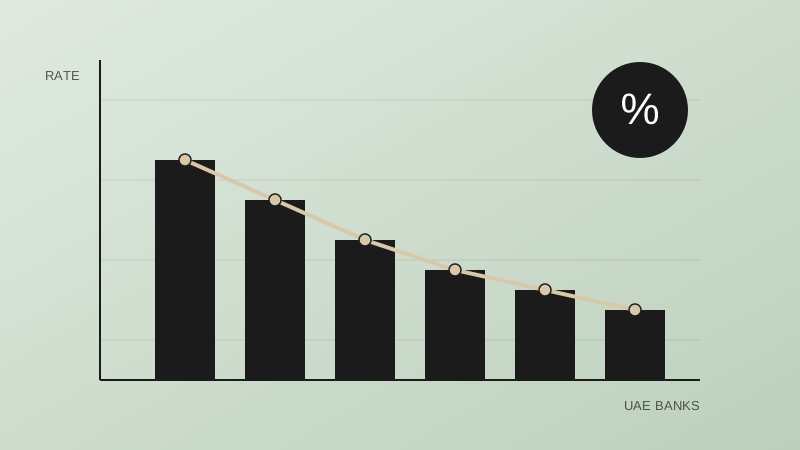
The headline number on Islamic finance is called a profit rate rather than an interest rate, but in practice it is quoted and compared the same way - and in 2026 both sit in a similar band (roughly 3.75-3.99% for sharp salary-transfer deals). The key difference is conceptual: with Murabaha your total obligation is fixed and known; conventional interest accrues on the reducing balance.
Side by side
| Conventional | Islamic | |
|---|---|---|
| Charge | Interest on a loan | Profit via lease (Ijarah) or sale (Murabaha) |
| Ownership | You own from day one | Bank owns, transfers to you over time |
| Typical rate (2026) | ~3.75-3.99% | ~3.75-3.99% (profit rate) |
| Max LTV | Up to 80% | Up to 80% |
| Open to | Everyone | Everyone (Muslim & non-Muslim) |
| Early settlement | Capped at 1% / AED 10,000 | Capped at 1% / AED 10,000 (or profit rebate) |
Costs & early settlement
Transaction costs are identical either way - 4% DLD, ~2% agency, 0.25% mortgage registration and the usual fees (see our full cost breakdown). The UAE Central Bank's early-settlement cap (1% of the balance or AED 10,000, whichever is lower) applies to both, though Islamic banks may structure it as a rebate on unearned profit.
How to choose
- Choose on the all-in numbers, not the label. Compare the rate/profit rate, fees and follow-on margin across both types - the cheapest deal could be either.
- Pick Islamic if you want a Sharia-compliant structure or value the fixed, known total of Murabaha.
- Pick conventional if a specific conventional bank simply offers you the lowest all-in cost.
The bottom line
Islamic and conventional mortgages cost about the same in 2026 - the right one is whichever bank gives you the lowest all-in price for your profile. Mortgease compares Sharia-compliant and conventional products side by side across our panel of 18+ UAE lenders, free, so you decide on the real numbers.