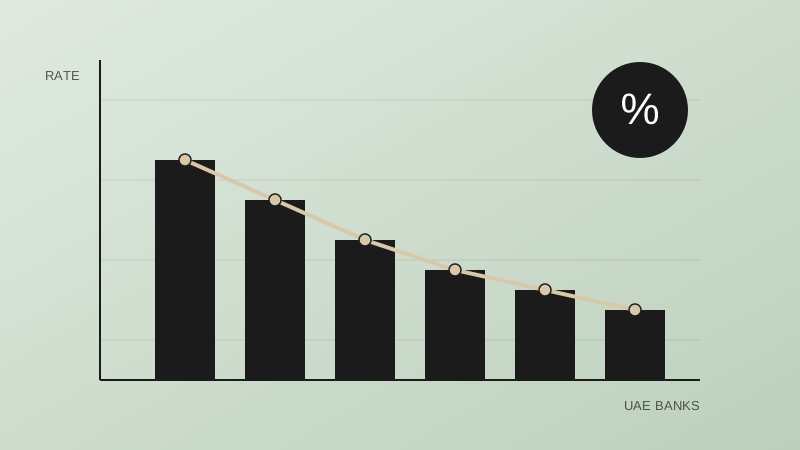
It's the first real decision every UAE mortgage buyer faces: lock in a fixed rate, or take a variable one that moves with the market? Get it right and you save money and sleep at night. Here's how each works in the UAE in 2026 — and how to choose.
How fixed rates work
A fixed rate stays the same for an agreed intro period — commonly 1, 2, 3 or 5 years. Your monthly payment is identical every month for that period, regardless of what the market does. The trade-off: you usually pay a small premium for that certainty, and almost all UAE fixed mortgages revert to a variable rate once the fixed period ends.
How variable rates work
A variable rate is priced as EIBOR + a fixed bank margin (e.g. 3-month EIBOR + 1.5%). EIBOR — the Emirates Interbank Offered Rate — moves with UAE/US monetary policy (the dirham is pegged to the dollar). When EIBOR rises, your rate and monthly payment rise; when it falls, they fall.
Side by side
| Fixed | Variable | |
|---|---|---|
| Monthly payment | Predictable | Changes with EIBOR |
| Protection if rates rise | Yes (during fixed period) | No |
| Benefit if rates fall | No (until revert) | Yes |
| Typical cost | Small premium for certainty | Can be cheaper, riskier |
| Best for | Budgeters, long-term holders | Short-term owners, rate optimists |
How to choose
- Pick fixed if: you want payment certainty, are budgeting tightly, or plan to hold the property through the fixed period. This is what most UAE buyers choose.
- Pick variable if: you expect EIBOR to fall, or you plan to sell or refinance within a year or two and won't benefit from paying for long-term certainty.
- Remember the revert: a 2-year fixed at a great rate still drops to EIBOR + margin afterwards — factor in the follow-on rate, not just the headline.
Can you switch later?
Yes — you can refinance from variable to fixed (or to a better fixed) at any time. The UAE Central Bank caps the early-settlement fee at 1% of the outstanding balance or AED 10,000, whichever is lower, so switching is often worth it when rates move. See our refinancing guide for the break-even math.
The bottom line
There's no universally 'better' option — it depends on your plans and your read on rates. Most UAE buyers choose a fixed intro period for certainty, then refinance when it reverts. The real value is comparing the all-in cost — headline rate, follow-on margin, and fees — across banks. Mortgease compares live fixed and variable products across our panel of 18+ UAE lenders so you choose with the full picture, free.